
Hazardous Area Classification | Training & Certification
Learn how to carry out hazardous area classification using IEC standards as well as NFPA standards. The course includes understanding the concepts of Zones in IEC (Divisions in NFPA), calculating the extent of the hazardous area, accounting for ventilation and preparing hazardous area classification drawings.
Get Certified when you pass the associated exam.
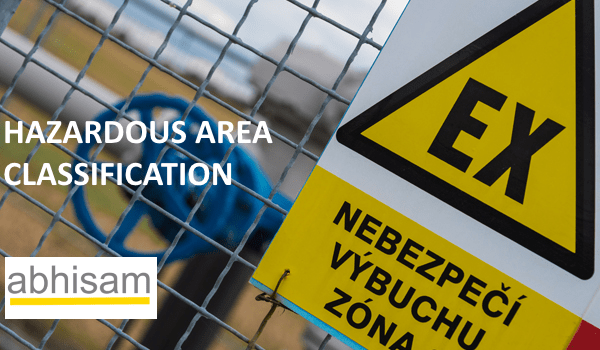
From hazardous-area theory to real classification work
Learn IEC Zones, NFPA/NEC Divisions, hazardous-area extent and classification drawings through worked examples and a real project case study.
Move from terminology to practical area classification
This is structured engineering training for professionals who need to understand how classification work is actually carried out—not just look up standards, charts or definitions.
Classify Zones & Divisions
Understand IEC Zone 0, 1 and 2, dust Zones 20, 21 and 22, and the NFPA/NEC Division approach.
Determine hazardous extent
Work through sources of release, release-rate factors, ventilation, extent calculations and practical examples.
Prepare classification drawings
See actual area-classification drawings and how hazardous areas are marked on engineering layouts.
Apply IEC and NFPA methods
Understand the European/IEC Zone system and the American NFPA/NEC Division system.
Work through a real case study
Follow an actual classification project from standard selection to hazardous-area extent and drawings.
Validate your learning
Use the self-assessment and then take the included online exam to earn the Abhisam certificate and digital badge.
For professionals working around hazardous locations
A real-life hazardous area classification case study
- Project introduction and facility context
- Study of layout drawings
- Selection of IEC or NFPA classification system
- Identification of sources of release
- Determination of hazardous-area extent
- Marking classified areas on the drawing
This bridges the gap between theory and the way area classification is carried out on an engineering project.
Preview the actual course experience
See how Abhisam uses animations, worked examples and interactive learning instead of relying on a talking-head video, PDF or slide deck.
More than standards and definitions
- Worked examples for hazardous-area extent
- Ventilation considerations and calculations
- Actual hazardous-area classification drawings
- Gas/vapor and combustible-dust classification
- IEC, ATEX, IECEx and NFPA/NEC concepts
- Myths and common misunderstandings
- Self-assessment before the final exam
“I have worked in the International Oil and Gas Industry as a technical instructor for more than thirty years. I have both used and recommended the products of Abhisam. I recommend them highly to all engineers and technicians in our industry.”
Choose your access period
The course content is the same in both versions. The main difference is how long you can access it.
Standard
- Course Duration: 12 hours of self paced learning (Earn 12 PDH)
- Access the course online 24/7 via any device for one year
- Exam & Certification for one learner
- Lifelong Valid Certificate
Professional
- Everything in Standard plus
- Access the course online for 3 years
Secure order processing by FastSpring. Major cards and PayPal accepted. Local taxes may apply.
Course Contents
Explore the main topics, modules and learning areas covered in the course. The course itself includes additional explanations, examples, interactions, exercises and assessment material beyond this outline.
See Course Contents
Basic Concepts
- Introduction to Hazardous areas
- Types of Hazardous Areas
- History of Hazardous Areas
- Hazardous Areas around the world
- Hazardous Atmosphere
- Hazardous Area Designation
- Types of Classification
- Combustible Dusts
- Why classify hazardous areas
- Basic concepts of Fires & Explosions
- Fire Triangle
- Sources of Ignition
- Controlling Ignition Sources
- Explosions – What is an explosion?
- Basic Concepts – What is a hazard?
- What is Risk?
- Avoiding Risk?
- Reducing Risk
- Benefits of Classification
- How does Area Classification work?
- How can area classification help us reducing costs?
Properties of Hazardous Materials
- Introduction
- Properties of Hazardous materials-1
- LEL & UEL
- Properties of Hazardous materials-2
- Combustible Dusts
- Dust Pentagon
- Ignition of Explosive Atmosphere
- Ignition Energy
- Flash Point & Fire Point
- Autoignition Temperature
- Combustible Dust Video
- Summary
Area Classification Standards
- Introduction
- Fundamental Ideas about Area Classification
- Purpose of classification
- Threshold for classification
- Probabilities of release
- Hot Spots- temperature classification
- Standards for classification
- European system / IEC system
- Zones for Gases & Vapors
- IEC Groups
- NFPA
- NFPA Classes
- Divisions
- IEC Dust Classification
- NFPA Dust Classification
- NFPA Fibers & Flyings
- Material Classification-IEC
- Material Classification-NFPA
- Material Classification-NFPA
- Material Classification- Comparison
- Temperature Classification-IEC
- Example of Temperature Classification Example
- Classification Example
- Example of Temperature Classification
- ATEX System
- ATEX Marking System
- IEC Ex -Unification of the two systems
- Summary
How to carry out Area Classification
- Introduction
- Sources of Release
- Factors affecting release rate
- Grades
- Grades and Zones
- Step by Step Guide to an Area Classification- Step 1
- Step 2
- Step 3
- Step 4
- Step 5
- Step 6-Initial Hazard Radius
- Step 7 -Ventilation
- Natural and Artificial Ventilation
- Degree of Ventilation-1
- Step 8- Ventilation Calculations
- Extent Calculations
- Volume Calculations
- Ventilation & Zones
- Example Calculation
- Step 8
- Further Improvements
- Case Study-1
- Q1
- Q2
- Case Study Learnings
- Summary
Practical Case Study
- Introduction
- Hazardous Area Classification Video
- Area Classification begins
- Area Classification Detailed Steps
- Sources of Release & Extent
- Hazardous Area Classification Drawing-1
- Drawing-2
- Final Installation
- Consequences of poor area classification
- Solution
- Thank you
Myths about Area Classification
- Introduction
- Myth 1
- Myth 1 Example
- Storage Tank example
- Myth 2
- Myth 3
- Myth 4
- Myth 4 Example
- Myth 5
- Summary
Self Assessment Test
The Self Assessment Test allows you to practice a mock test before you take the Hazardous Area Certification Exam.
Frequently asked questions
Is this a live instructor-led course?
Does the course cover both IEC Zones and NFPA/NEC Divisions?
Is an exam included?
Can I see the course before buying?
How long can I access the course?
Ready to learn hazardous area classification properly?
Build a structured, practical understanding of IEC Zones, NFPA/NEC Divisions, extent calculations, ventilation and classification drawings.
Find out what is Area Classification
New to Hazardous Areas? In this short guide find out what is Area Classification.
Questions?
Contact Us by filling the form below OR call us OR email